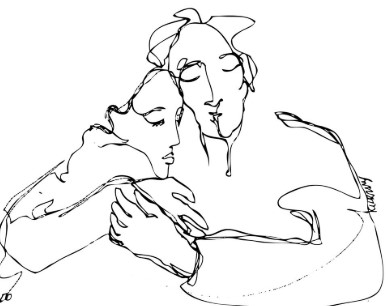
As a therapist I often get met with a lot of curiosity when I say that as well as working with individuals, I also work with couples and multiple-partnered relationships. For me, one of the things I enjoy most about working with relationships is the opportunity to observe how dynamics within partnerships function (or sometimes the ways in which they don’t function). I like the challenge of thinking both about the feelings, needs and wants of the individuals I am working with and the way in which these emerge within the wider system of the relationship.
When I work with a couple or a multiple-partnered relationship, my initial focus is on trying to gain a sense of each party as an individual and how they are within their relationship. Often there will be a specific catalyst that has led to therapy – this may be the discovery or disclosure of infidelity, the identification of patterns of conflict or stuckness within the relationship, unhappiness with the types of or lack of sexual or physical intimacy and/or the discussion of opening up a relationship or otherwise changing the boundaries by which it operates. Sometimes there isn’t one specific area of focus but rather broader issues around communication, reaching agreement on future plans and shared goals and generally feeling heard and understood within the partnership.
Approaching a counsellor for relationship therapy often feels like a really big step for those that I work with. For some people, crossing this threshold by researching couples counselling, or getting in touch for an appointment brings with it a sense of relief and even excitement. The acknowledgement of the need for help can be freeing in and of itself! For other people, a whole other set of emotions may be activated including shame, guilt, anxiety, vulnerability and a feeling of failure. I regularly see in my counselling the courage that it has taken to seek counselling and to acknowledge that help is needed. I am often very touched by the bravery of individuals within the relationships I help support.
Coming to relationship counselling requires work, but it is rewarding work! A lot of sessions involve talking and trying to gain a shared sense of what is going on and the feelings, thoughts and perspectives of each person involved. My aim is for all parties to feel heard, understood and able to share honestly without feeling judged. Where it feels beneficial, I will guide couples through particular exercises to improve communication and share information and models which offer a different option for engaging with an issue or an alternative perspective. Sometimes I will suggest that the work we begin in the session is practiced at home or I will offer activities that can be worked through together in between sessions.
Sometimes rapid progress and improvements can be made within relationship counselling sessions. Where all parties are committed to ‘doing the work’ it may be that significant differences in communication, closeness and intimacy are experienced soon after embarking on the process. In other instances – even where there is a strong sense of commitment to the process – it may be that change and improvement comes more slowly. Longstanding, entrenched patterns of behaviour can be slow to untangle and change and, very understandably, where there is a lot of hurt and pain within a relationship (for instance because of infidelity and betrayal) this can also take significant time to repair and heal.
Some couples (or multiple-partnered relationships) make the decision through the process of counselling that they do not want to stay together. Where this is the case, therapy can help this transition to be navigated in a kind, respectful and mutual way. Often this can be a profoundly healing experience and one which allows the relationship as a whole to be honoured alongside navigating the loss(es).
If you are interested in knowing more about the counselling I offer to couples and multiple-partnered relationships, more information can be found here or please get in touch.
 Crossgate Counselling Sheffield